
Is Your Kitchen Lighting Working For You?
Your kitchen might look beautiful, but is the lighting actually doing its job?
The kitchen is one of the busiest spaces in the home. It's where we prepare meals, make coffee, help the kids with homework, entertain friends and often end up chatting long after dinner is finished.
But here's something many homeowners overlook: good kitchen lighting isn't just about how bright the room is. It's about having the right light in the right places.
You might have beautiful cabinetry, stunning benchtops and modern appliances, but if you're struggling to see what you're chopping or constantly standing in your own shadow, your lighting might not be working as well as it could.
At Sublime Electrical Co, we believe good lighting should make everyday life easier, more comfortable and more enjoyable.
So, let's look at how to get more out of your kitchen lighting.
1. Are Your Benchtops Properly Lit?
Think about where you spend most of your time working in the kitchen.
It might be the main benchtop, the kitchen island or the area beside the stove.
These are your task areas, and they need enough light to help you see clearly when preparing food, reading recipes and using kitchen appliances.
One common issue is relying entirely on ceiling downlights.
Depending on their position, downlights can leave shadows across your benchtop, especially when you're standing directly underneath them.
What can help?
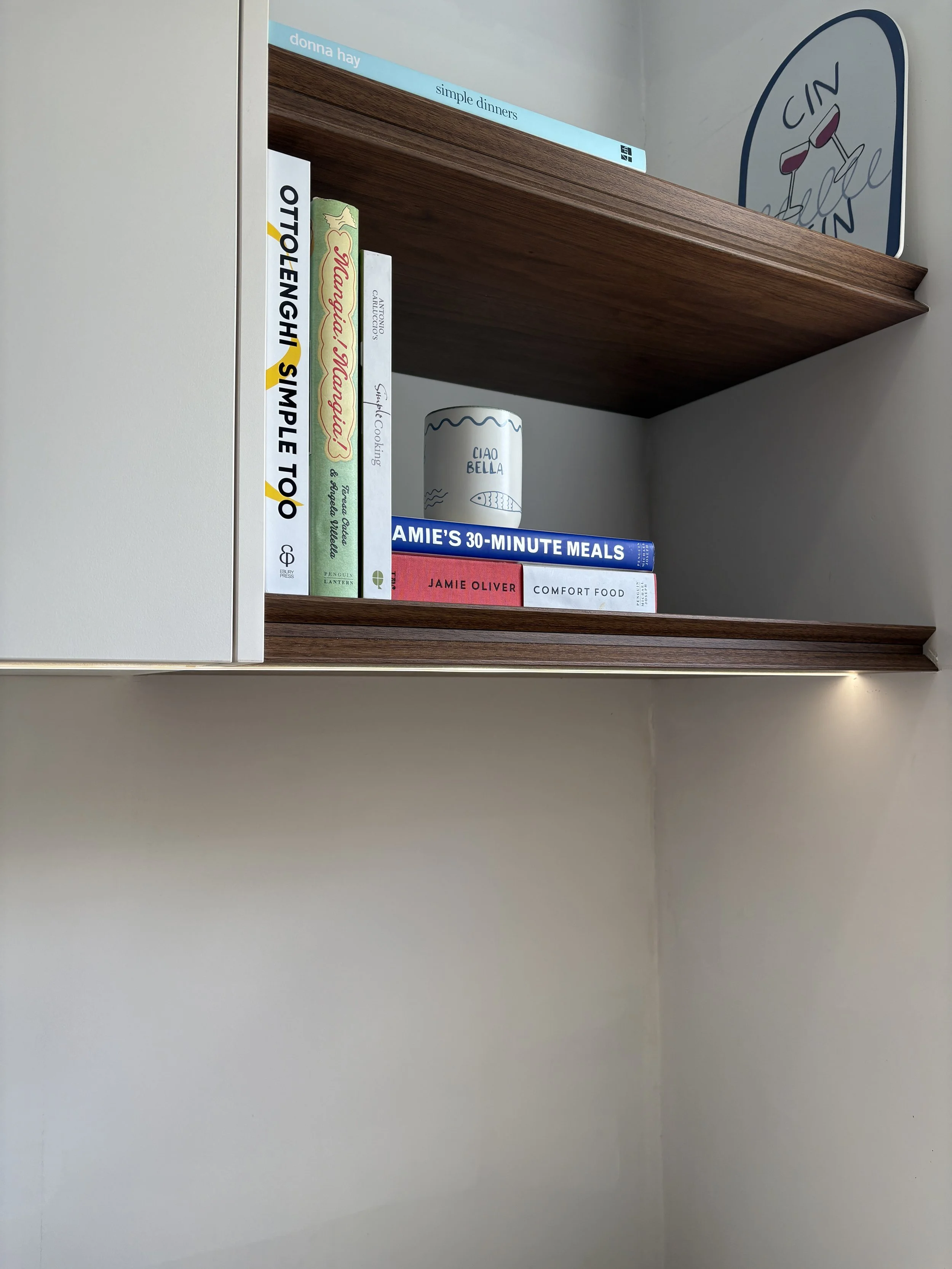
Under-cabinet LED lighting is a practical
way to illuminate benchtops without
needing to brighten the entire room.
Pendant lights or appropriately positioned lighting can also help illuminate a kitchen island, particularly if it's used for food preparation as well as entertaining.
The goal is simple: make sure the areas where you work have the light they need.
2. Are You Relying Too Much on Downlights?
Downlights are popular for a reason. They provide general illumination and create a clean, modern look.
But they aren't always enough on their own.
If your kitchen feels dark in certain areas despite having plenty of downlights, the issue could be their placement rather than the number of lights.
Cabinetry, appliances and even your own position can affect how light reaches your work surfaces.
Instead of automatically adding more downlights, consider whether a combination of general lighting and focused task lighting would work better.
Sometimes, improving the placement and type of lighting can make a bigger difference than simply adding more fittings.
3. Have You Chosen the Right Light Colour?
Not all white light looks the same.
You may have noticed that some lights create a warm, inviting glow, while others look cooler and brighter.
This comes down to colour temperature, measured in Kelvin (K).
Here's a simple guide:
Warm white (around 2700K–3000K): Creates a softer, welcoming atmosphere.
Neutral white (around 3500K–4000K): Offers a balanced appearance that can work well in functional spaces.
Cooler white (around 5000K): Produces a crisper, daylight-like appearance.
There's no single colour temperature that's right for every kitchen. The best choice depends on your finishes, natural light, personal preference and how you use the space.
It's also worth considering consistency. Mixing lighting with noticeably different colour temperatures can make a kitchen feel disjointed.
If you're updating your lighting, think about how the new fittings will look alongside your existing lights and the colours of your cabinetry and benchtops.
4. Is Your Kitchen Lighting Flexible?
Your kitchen needs to work throughout the day, not just when you're cooking dinner.
In the morning, you might want bright, practical lighting while preparing breakfast. In the evening, softer lighting can create a more relaxed atmosphere when you're entertaining or sitting around the island.
This is where lighting controls can make a difference.
Depending on the fittings and electrical setup, dimmers or separate switching for different lighting zones can give you greater control over the space.
For example, you could have:
General ceiling lighting for everyday use.
Under-cabinet lighting for food preparation.
Pendant lighting over the island.
Softer lighting for evenings and entertaining.
Having separate controls allows you to use only the lighting you need, when you need it.
Just make sure any dimmers are compatible with the LED fittings they're controlling.
5. Don't Forget the Small Details
When planning kitchen lighting, it's easy to focus on the main fixtures and overlook the finer details.
But these are often the things that make the biggest difference to how a kitchen functions.
Consider:
Inside pantries and cupboards: Could additional lighting make it easier to find what you're looking for?
Kitchen islands: Is the lighting practical for both food preparation and socialising?
Sinks and cooking areas: Are these workspaces adequately illuminated without creating distracting shadows or glare?
Natural light: Does your kitchen become noticeably darker in the evening or during winter?
Switch placement: Are your lighting controls convenient and intuitive to use?
These details are particularly important if you're renovating or building, because it's generally easier to plan wiring and lighting positions before the work is completed.
6. Thinking About Upgrading Your Kitchen Lighting?
You don't necessarily need a complete kitchen renovation to improve your lighting.
Depending on your existing setup, a few targeted changes could make the space more functional.
This might include adding under-cabinet LED lighting, improving illumination over an island, changing outdated fittings or installing compatible dimmers.
If you're planning a kitchen renovation, it's worth discussing the lighting layout early. That way, your lighting can be designed around your cabinetry, appliances and how you intend to use the space.
A licensed electrician can assess your existing installation and help determine which options are suitable for your home.
So, Is Your Kitchen Lighting Working for You?
Take a moment to think about your own kitchen.
Can you comfortably see what you're doing when preparing meals? Are there areas that always seem too dark? Do your lights create the atmosphere you want when family and friends gather?
If you've answered no to any of these questions, it might be time to rethink your lighting.
Good kitchen lighting isn't necessarily about having more lights. It's about having the right combination of lighting, positioned where it will make the most difference.
And sometimes, a small change can completely transform how a space feels and functions.
Let's Make Your Kitchen Work Better
At Sublime Electrical Co, we help homeowners across Fremantle and surrounding Perth suburbs with practical lighting solutions, LED upgrades and electrical improvements designed around everyday living.
If your kitchen lighting isn't quite doing the job, we're happy to help you explore your options. Contact us today for your free quote.